RAHAT (Rehabilitation of Ailing Humans through Action and Treatment) is a non-profit charitable organization created to meet a growing need for community based programs in the field of health, particularly mental health, laying special emphasis on preventive education, early intervention and rehabilitation.
RAHAT was formed in 1988 to augment the meagre existing facilities in the area of health education and action programs with community orientation. This need was particularly felt amidst the increasing stresses of modern living, leading to a breakdown in the coping abilities of individuals caught at such crossroads.
Our Vision
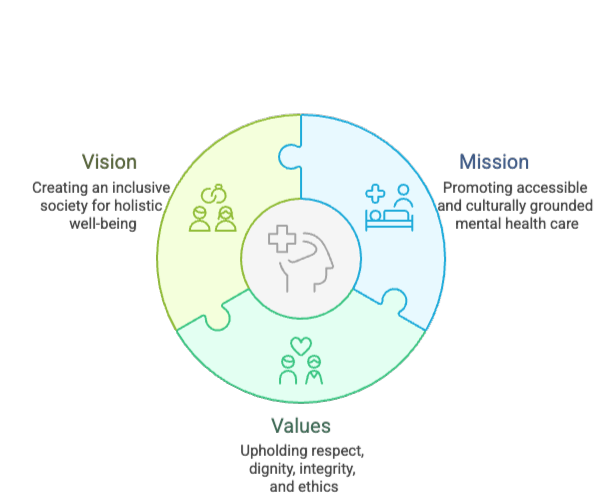
Inspired by the meaning of “Rahat” as “solace” or “relief,” we strive to create an inclusive, stigma-free society where individuals and communities experience holistic well-being, mental, emotional, physical, and spiritual and are supported to live with dignity, balance, and purpose.
Our Mission
To promote accessible, affordable, and culturally grounded mental health interventions through evidence-informed approaches for education, prevention, empowerment, and responsive care. We collaborate with partners locally and globally to build capacity, share knowledge, and ensure people from all backgrounds can seek support with confidence and respect.
Our Values
Our work is rooted in compassion, dignity, and respect for every person. We are committed to inclusive, stigma-free spaces where people feel safe, heard, and valued. Guided by ethical and evidence-informed practice, we collaborate with communities and professionals to strengthen well-being. We believe in empowering individuals with knowledge and skills, and in a holistic approach that nurtures mind, body, and spirit, supporting healing, resilience, and human potential.
RAHAT’s Journey over the Years
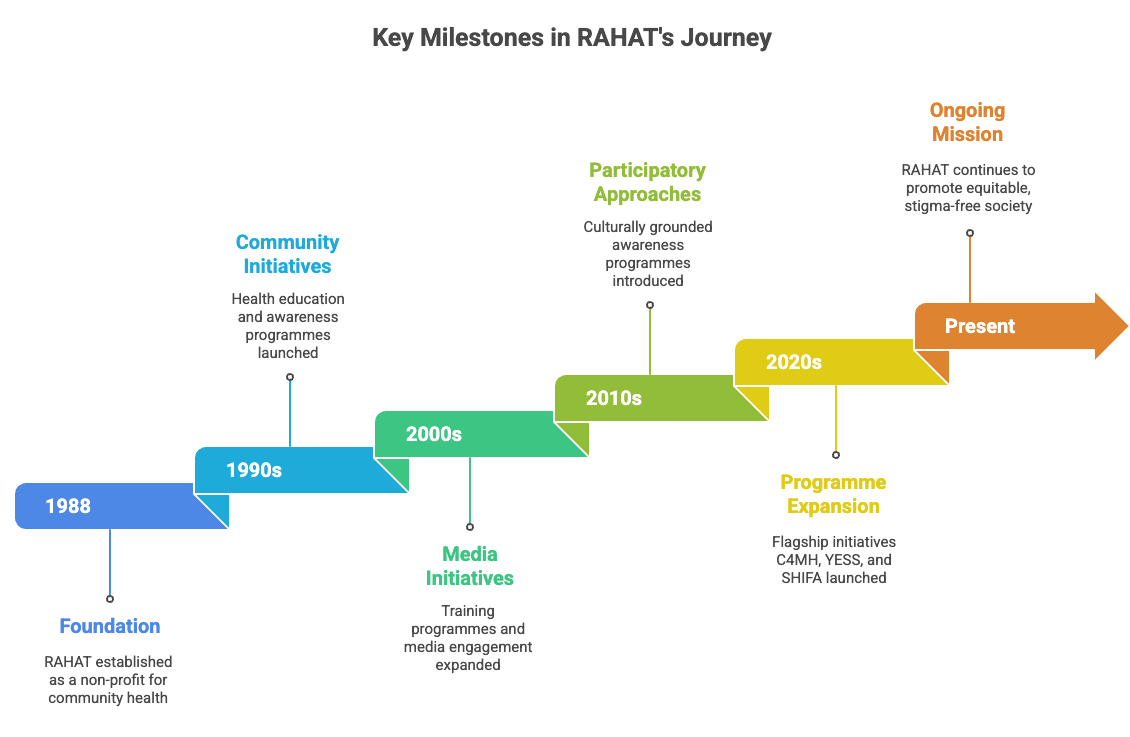
Foundation
RAHAT (Rehabilitation of Ailing Humans through Action and Treatment) was established as a non-profit charitable organisation to address the growing need for community-based health programmes, particularly in mental health.
Community Initiatives
Launched health education and awareness campaigns through IEC tools, conducting workshops and seminars with a focus on preventive education and early intervention, responding to rising stress levels and enabling coping with the challenges of modern living.
Expansion of Media Programmes
Developed structured training programmes and media participation through print and electronic media to support individuals and families affected by mental health conditions, while expanding partnerships with schools, colleges, and community groups.
Participatory Approaches
Introduced innovative and culturally rooted methods such as story scrolls, information cubes, and traditional floor games to make mental health education interactive and relatable. These were field tested and developed into toolkits, translated and copyrighted for public education and campaigns.
Expansion of Mental Health Programmes
Launched the Campaign for Mental Health (C4MH), Youth for Emotional and Social Support (YESS), and Support for Healing, Integration, Feelings, and Awareness (SHIFA) through training, capacity building, outreach, and research programmes.
Today
RAHAT continues to build an equitable, stigma-free society by combining preventive education and early intervention with innovative community-based strategies, fostering holistic health, emotional well-being, and social welfare through compassion, dignity, and inclusivity.
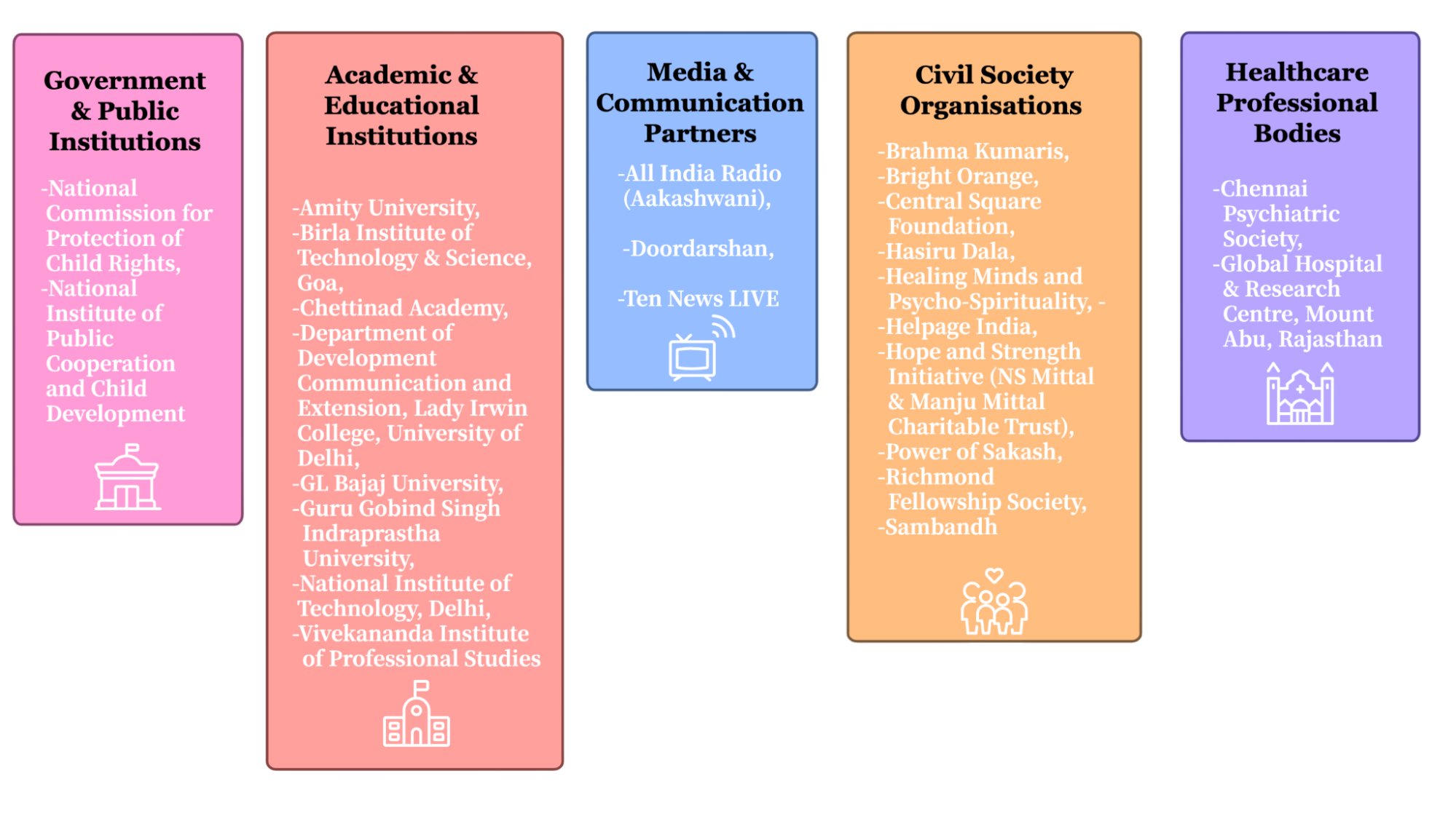
RAHAT’s Collaborators and Partners
RAHAT believes in the power of collaboration to extend its reach and deepen its impact in the field of mental health and well-being. Over the years, the organisation has partnered with diverse institutions, platforms, and initiatives to create safe spaces for dialogue, promote mental health awareness, and support individuals across age groups and communities.
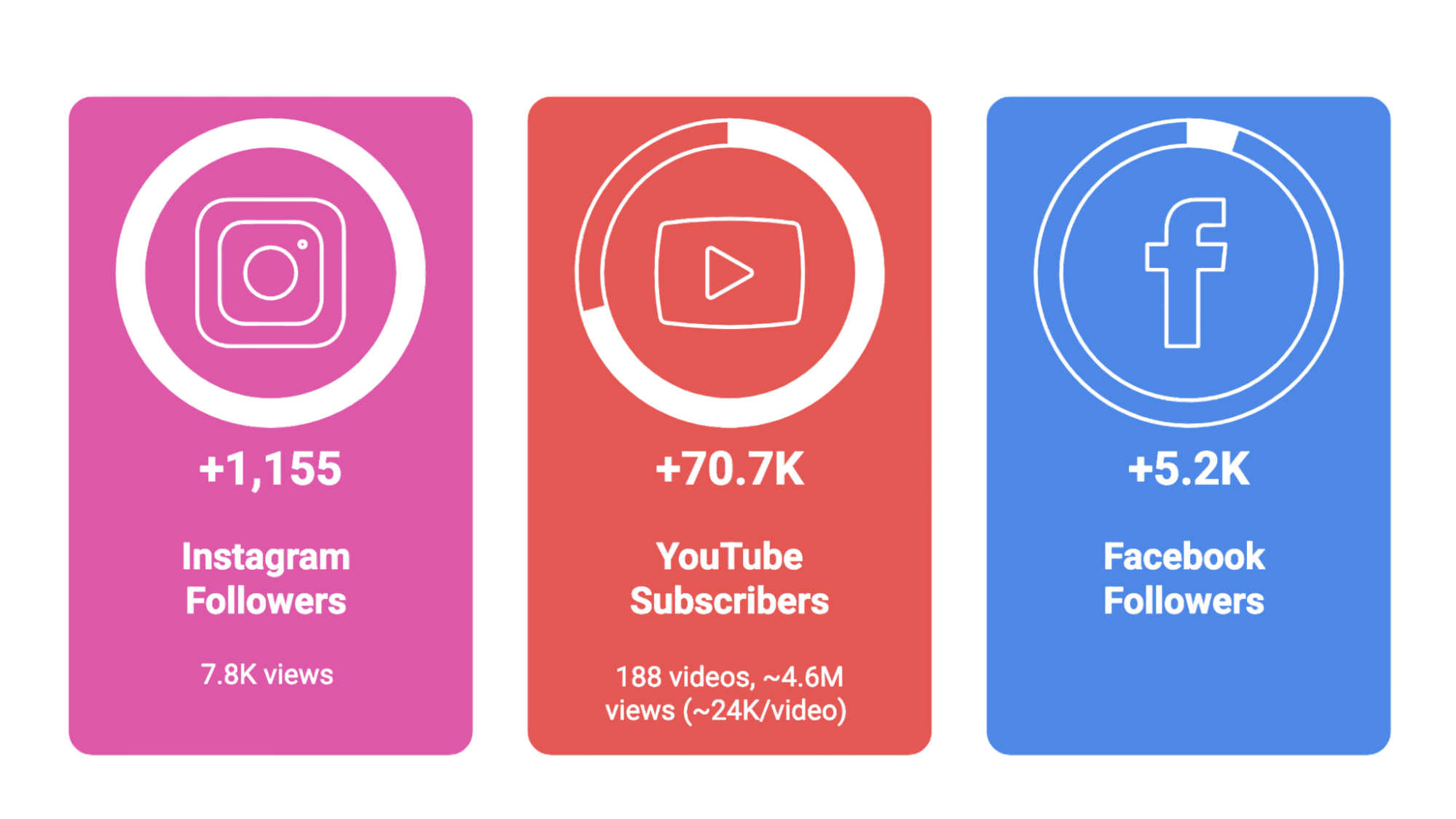
Our Digital Outreach & Media Engagement
Stay connected with RAHAT to receive updates on mental health programmes, youth engagement activities, training, campaigns and community initiatives. Follow us on our official social media platforms to explore our work, stories from the field and upcoming events.